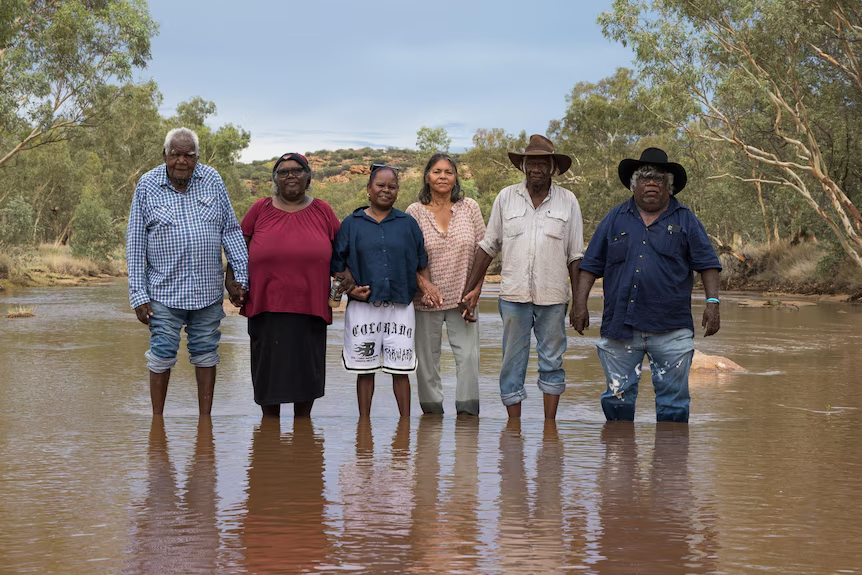
CANBERRA – A landmark High Court case is testing how Aboriginal cultural rights interact with water licences, after Traditional Owners challenged a huge groundwater allocation in the Northern Territory.
Outside court, community members spoke about responsibility to protect water systems and sacred places. Inside court, the system demonstrated its own sacred practice: turning living obligations into numbered paragraphs.
A spokesperson said the matter is “complex” and must be balanced carefully. “We support cultural values,” they said, “as long as those values can be expressed in a measurable format between 0 and 5, preferably with examples.”
The case has sharpened attention on how decisions are made—who gets heard, what evidence counts and whether “consultation” means a real conversation or just an email sent at 4:59pm.
To improve clarity, an agency announced it will develop a Cultural Water Consideration Framework, featuring a decision-tree that begins with Does This Slow The Project? and ends with Please Refer To The Next Framework.
Community observers said water isn’t just a resource – it’s relation, memory, law and survival. The system agreed, noting water is “highly valued” and therefore should be managed through a process that ensures nobody touches it without a licence, except the people who already have one.
Discover more from Indigenous News
Subscribe to get the latest posts sent to your email.