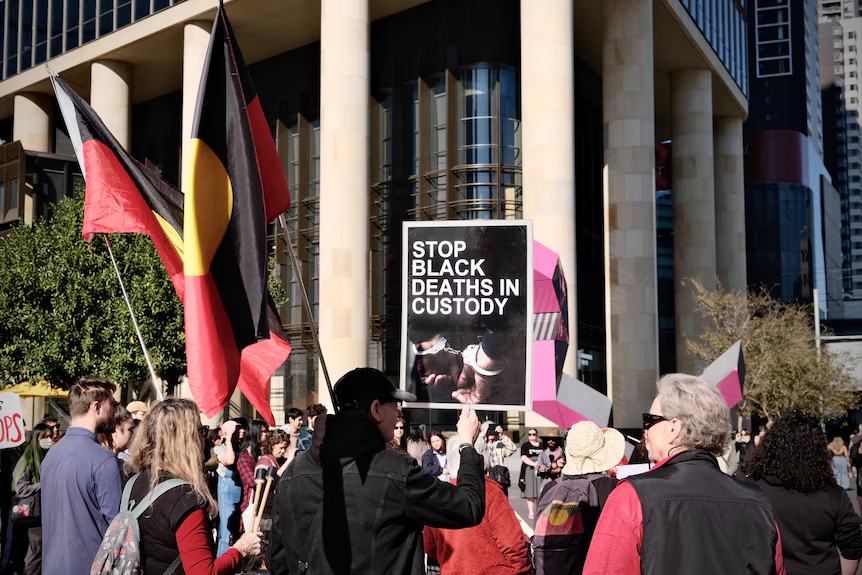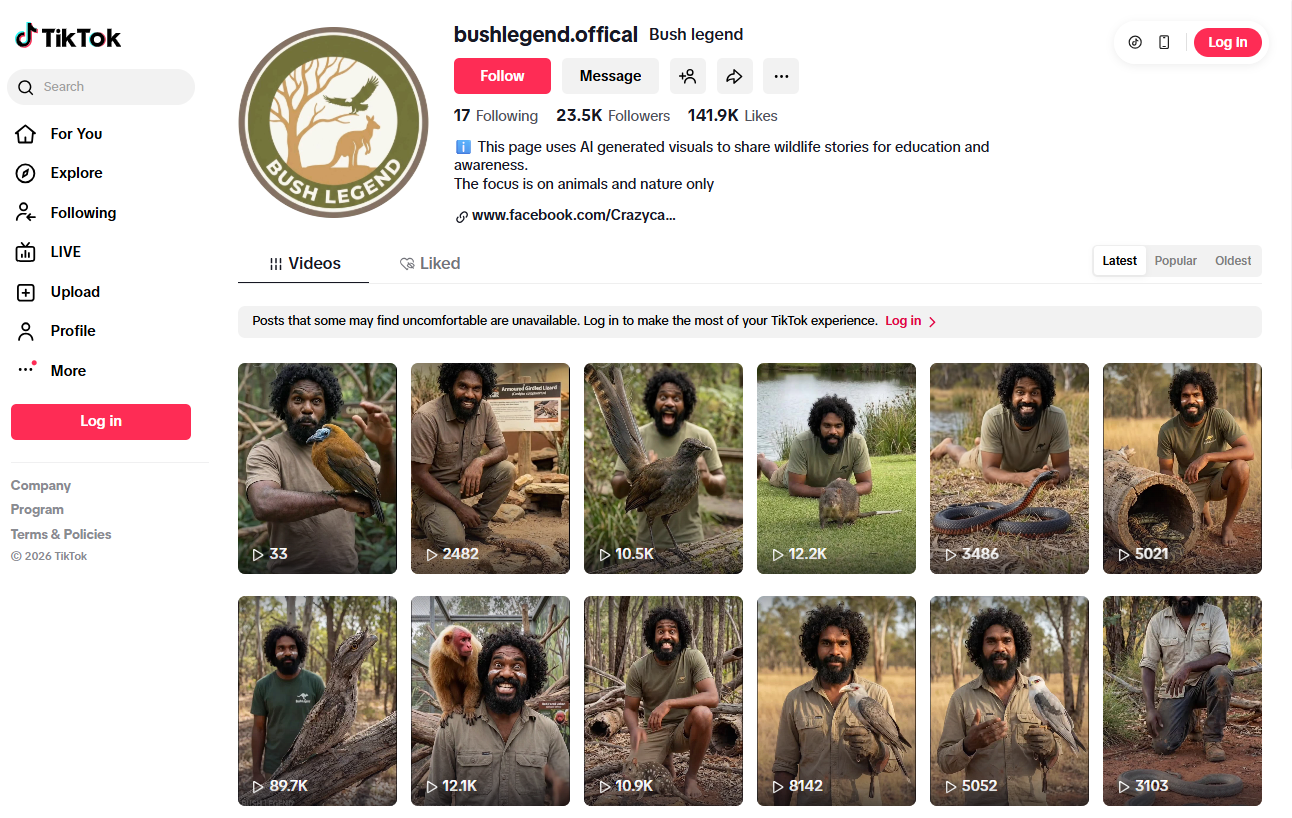
A wildly popular wildlife account fronted by a cheerful Aboriginal “ranger” has been revealed as an AI creation, sparking warnings about “digital blackface” and cultural theft. The character, known as Jarren, fronts the Bush Legend: Wildlife Stories and Facts pages on Facebook, Instagram and TikTok. He looks and sounds like a young Aboriginal man from the outback… but he was built on a computer by South African content creator Keagan John Mason, who lives in Aotearoa New Zealand.
NITV reports that Bush Legend’s pages now attract almost 200,000 followers across social media, with 92,000 on Facebook, 89,000 on Instagram and 25,000 on TikTok. Many viewers believe Jarren is a real person, leaving comments about his “natural” on‑screen presence and asking how he gets so close to snakes, crocodiles and wedge‑tailed eagles. The pages are promoted as “digitally created for education & awareness” but the fine print is easy to miss for people quickly scrolling their feeds.
Indigenous and non‑Indigenous experts say the account is part of a disturbing trend: non‑Indigenous people using AI to imitate First Nations identities and cultural authority. Kamilaroi STEM leader Corey Tutt has warned that AI tools are beginning to replicate cultural knowledge and lived experience without community control, including images that resemble deceased people. Wildlife presenter Damian “Wildman” Duffy, who lives on Larrakia Country, has told NITV that everything on Bush Legend – the character, the animals and the interactions – is artificial, yet the creator can still profit from the views.
Wuthathi, Yadhaigana and Meriam lawyer Dr Terri Janke says avatars like Jarren can displace real Aboriginal voices. She said it “takes space from real First Nations voices” and risks turning culture into content that can be copied, remixed and monetised without obligations to mob. Researchers describe this as another form of “digital blackface”, where a non‑Black person creates a Black or Indigenous caricature online.
The controversy also sits alongside concerns about “black cladding” – non‑Indigenous organisations using Indigenous branding to win contracts and legitimacy. An SBS NITV explainer on black cladding notes that some businesses meet the bare minimum 51 per cent Aboriginal ownership test on paper while real control sits elsewhere, diverting opportunities away from genuine community‑controlled enterprises.
Bush Legend’s creator has pushed back on criticism using the avatar itself. In a recent video, Jarren said, “I’m not here to represent any culture or group” and told unhappy viewers to “scroll and move on”. Meta has since applied AI labels to some of the content, but there is no evidence of broader penalties or requirements to consult First Nations communities.
Discover more from Indigenous News
Subscribe to get the latest posts sent to your email.