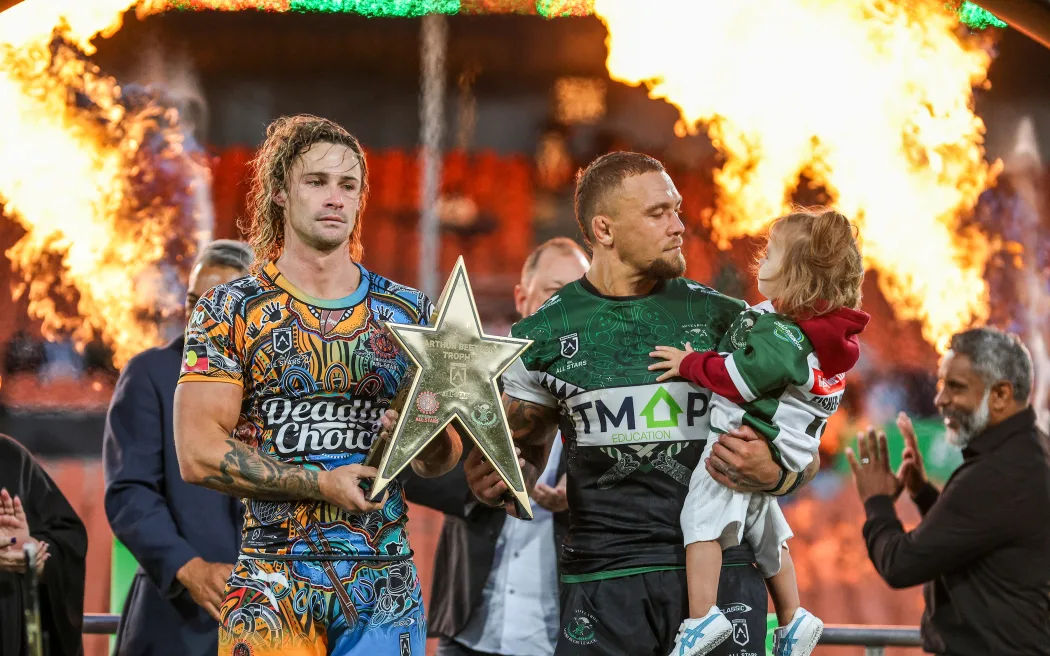
A draw on the scoreboard has been framed as a win for culture after the annual Māori versus Indigenous NRL All Stars match, with players and organisers highlighting the fixture’s role in strengthening identity, connection and leadership beyond sport.
Indigenous Men’s captain Nicho Hynes said the match outcome mattered less than what the week represented for both teams and their communities. “We all want to win” he said. “But when you look back on it, two proud cultures are walking away winners. Culture is the winner at the end of the day. That’s way more important than the end result for me.”
The annual fixture began in 2010 as a deliberate platform to showcase Indigenous excellence and leadership in rugby league. More than 15 years later, players described it as a rare space where cultural practice is centred — from time on country and at marae, to shared meals, performance, and story.
Māori Wāhine Toa All Star captain Kennedy Cherrington said the cultural weight of the jersey sat above traditional sporting milestones. “I’ve been honoured to play in Origins, World Cups and Grand Finals” she said. “But we’re Māori first. Culture is the number one.”
Cherrington said she wanted rangatahi to take pride in identity and language, rejecting whakamā (shame or reluctance) about being Māori. “The conversation I really want to get through to our young rangatahi coming through is to be proud to be Māori. No whakamā around being Māori” she said.
Supporters argue the match’s value is amplified by what it models for young people watching – a public assertion that Indigenous identity is not separate from high performance, but a foundation for it. Players also describe the camp environment as a place of reconnection, particularly for those living away from home or raised at a distance from culture.
Hynes dismissed criticism that the fixture has “run its time”, urging sceptics to experience the week’s cultural program and the conversations shared between teams. The packed presentations and strong whānau support, he said, showed the match still carries deep meaning.
For many supporters, the draw symbolised something fitting: two proud cultures meeting on equal terms, with respect and visibility, in front of the next generation.
Discover more from Indigenous News
Subscribe to get the latest posts sent to your email.