
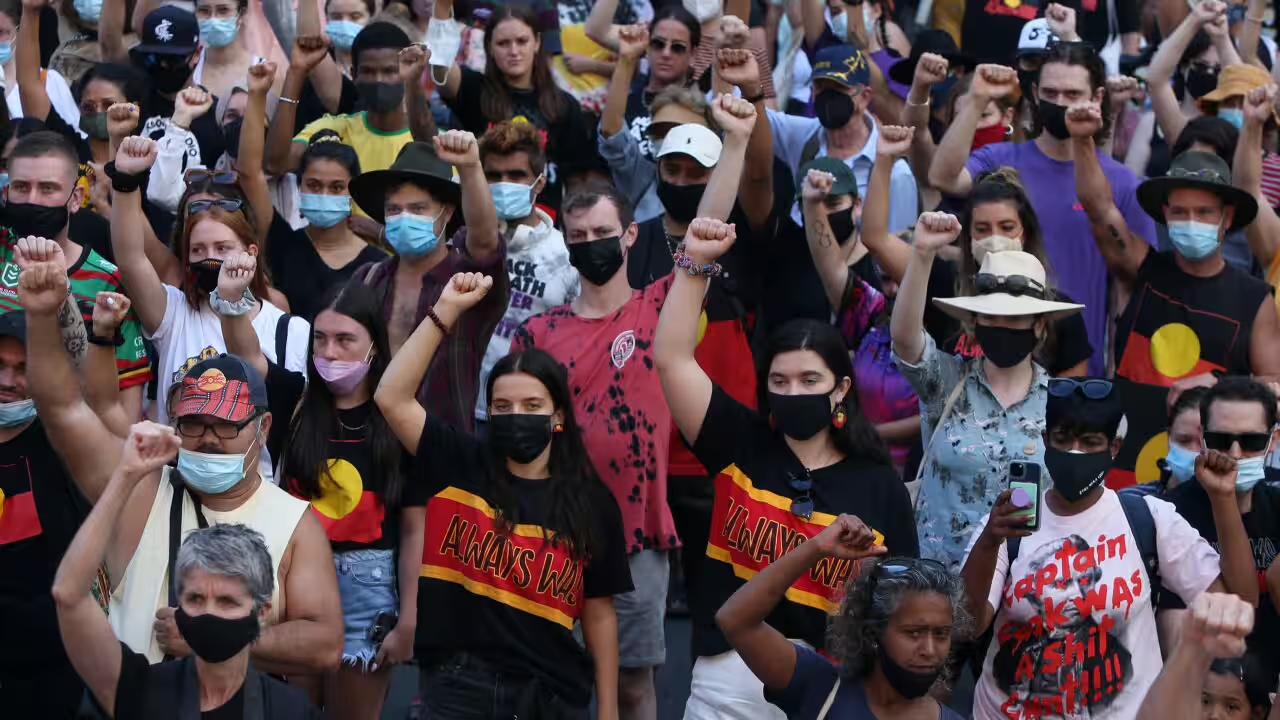
For many Aboriginal and Torres Strait Islander people, 26 January is less a celebration than a day of mourning, survival and protest – marking the beginning of invasion and ongoing dispossession.
The first national Day of Mourning was held in Sydney in 1938, led by the Aborigines Progressive Association and the Australian Aborigines’ League to protest 150 years of British colonisation.bHistorians describe it as the first national civil‑rights gathering of First Nations activists, and a foundation of the modern Aboriginal political movement.
In recent decades, January 26 rallies have grown across capital cities, often drawing tens of thousands of people under banners such as Invasion Day and Survival Day. Events like Sydney’s Yabun festival, run by Gadigal Information Service, combine music, culture and political speeches centred on sovereignty and self‑determination.
This year those events collide with NSW’s new anti‑protest framework. The Terrorism and Other Legislation Amendment Bill 2025 gives police the power to ban assemblies in declared areas for up to three months after a terror incident. A declaration currently covers Sydney’s central, north‑west and south‑west metropolitan regions for 14 days, and can be renewed.
Indigenous leaders and civil‑rights groups stress they condemn the Bondi Beach attack, but argue blanket protest bans risk silencing communities who have been rallying for justice on this date since 1938.
They also point out that January 26 protests have been central to calls for treaty, truth‑telling processes and an honest reckoning with Australia’s colonial history – issues that extend well beyond this year’s security crisis.
Discover more from I-News
Subscribe to get the latest posts sent to your email.
